Consider entering a magical room filled with shelves packed with countless objects, organized by shape, size, kind, and usage. However, the room is pitch-dark, and you can only see the objects you recognize. The rest remain hidden in the shadows. Out of the thousands of objects, you can only perceive those you already know. The unknown objects stay invisible, shrouded in darkness. Now, imagine being asked to pick an object mentioned in a text. You might encounter the following scenarios:
- 1You can’t read the word. You’re unable to participate in the game at all.
- 2You can read the word, but only phonetically. You’ve learned the sound but lack any understanding of its meaning.
- 3You can read the word, but you don’t know what it means. Recognizing the word doesn’t equate to understanding it.
- 4You can read and understand the word but don’t know where to find the corresponding object. This leads to a long and confusing search.
- 5You can read, understand, and know exactly where to find the object. You’re able to retrieve it effortlessly.
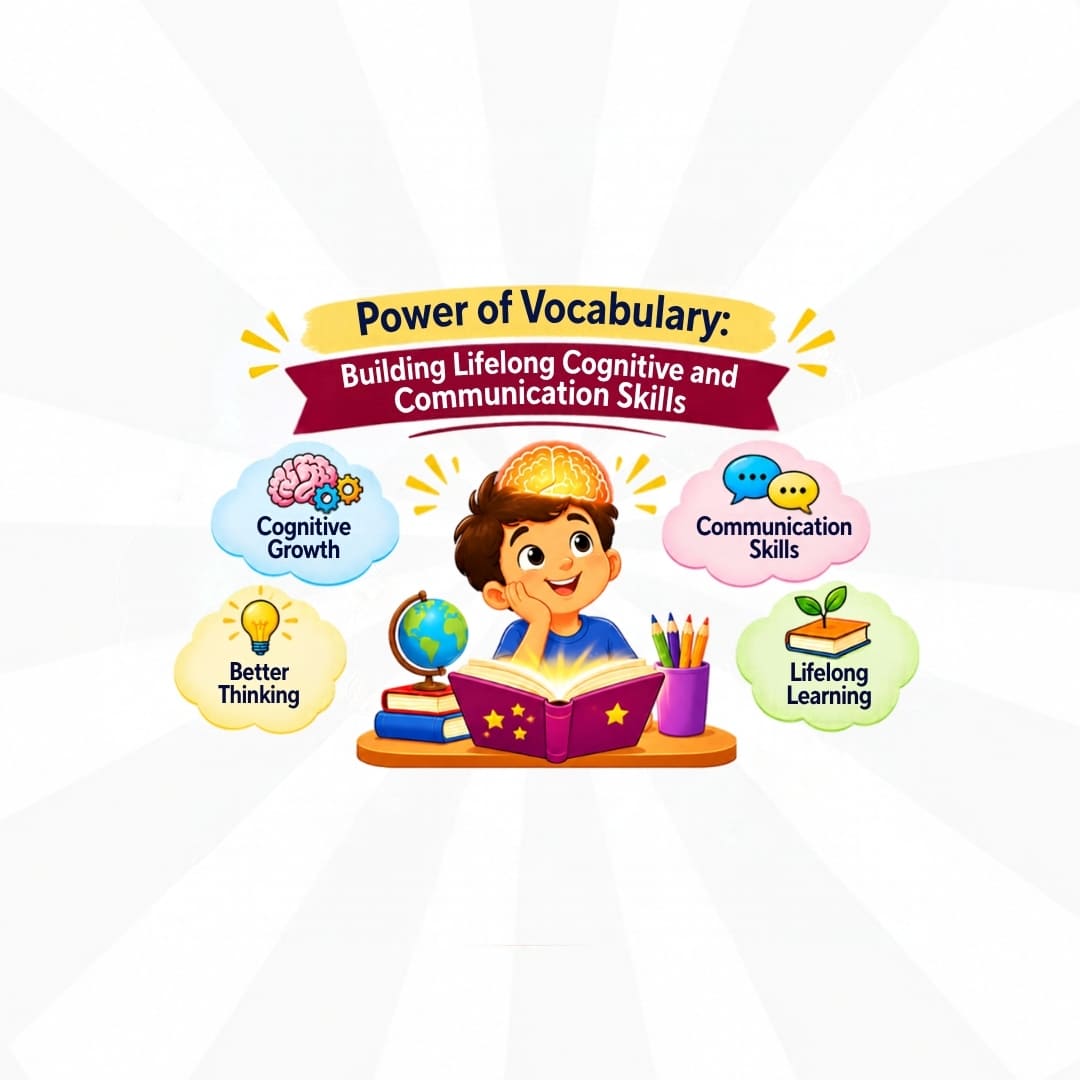
This is how our brain handles the vast information stored within it. Vocabulary acts as the key to accessing and understanding these ideas. Research shows that a rich vocabulary leads to better academic performance, clearer expression, and exceptional communication skills.
The Wealth of Words
The word “vocabulary” comes from the Latin root “vocare,” meaning “to call” or “to summon,” and the suffix “-bulary,” derived from “bulum,” indicating tools or instruments. Together, “vocabulary” symbolizes a "tool of words" or a "collection of words" summoned for communication. Synonyms include lexicon, lexis, and word bank. Building vocabulary is unlike creating wealth with money. It’s an ongoing, diligent process that offers lifelong rewards. Let’s explore two broad categories of vocabulary:
Thinking Vocabulary
Thinking vocabulary refers to the words and concepts we use internally for decision-making, introspection, and reasoning. This vocabulary is often broader than our expressed words, including abstract concepts and mental representations. Not all thoughts are verbalized, making thinking vocabulary a foundation for cognition, reasoning, and problem-solving. For instance, a person may think of a concept like “bliss” but only express it as “happy.”
Linguistic Vocabulary
Linguistic vocabulary encompasses the words and phrases we use to communicate through speaking or writing. It includes grammar, syntax, and context, forming the backbone of effective communication. While linguistic vocabulary focuses on external expression, it heavily relies on thinking vocabulary for clarity and substance.
The Interplay Between Thinking and Linguistic Vocabulary
Thinking and linguistic vocabulary complement each other. While thinking vocabulary facilitates internal processing, linguistic vocabulary translates these thoughts into effective communication. The more we articulate, the clearer our thoughts become. Similarly, richer thinking vocabulary enhances our ability to select precise words for communication. Thinking vocabulary isn’t confined to a specific language. It reflects our ability to reason, reflect, and imagine. Conversely, linguistic vocabulary requires mastery of a language. When thinking vocabulary is rich, it’s easier to find words in linguistic vocabulary—much like the objects in the magical room that become visible when you’re aware of them.
The Importance of Early Exposure
Introducing children to diverse ideas, concepts, pictures, songs, and rhymes during their formative years enriches their thinking vocabulary. As they grow and learn linguistic skills, their thinking vocabulary provides a solid foundation, making it easier to grasp new concepts and communicate effectively. In such an environment, educators become facilitators rather than mere instructors.
Final Thoughts
Vocabulary is the gateway to understanding and expressing the infinite complexity of the world around us. By nurturing it, we unlock not just communication skills but also profound cognitive and intellectual growth. Let’s immerse children in a world of words, allowing them to build this invaluable wealth and see the magical room of their minds light up with endless possibilities.
- #Vocabulary Development
- #Importance of Vocabulary
- #Vocabulary Building for Kids
- #Building Children's Vocabulary
- #Early Childhood Language Development
- #Cognitive Development in Children
- #Communication Skills for Kids
- #Thinking Vocabulary
- #Linguistic Vocabulary
- #Language and Cognitive Skills
- #Early Learning
- #Child Language Development
- #Improving Vocabulary Skills
- #Reading and Vocabulary
- #Vocabulary Enrichment Activities
- #Effective Communication Skills
- #Parenting Tips
- #Early Childhood Education
- #Raising Confident Readers
- #Little Laudable Learners